
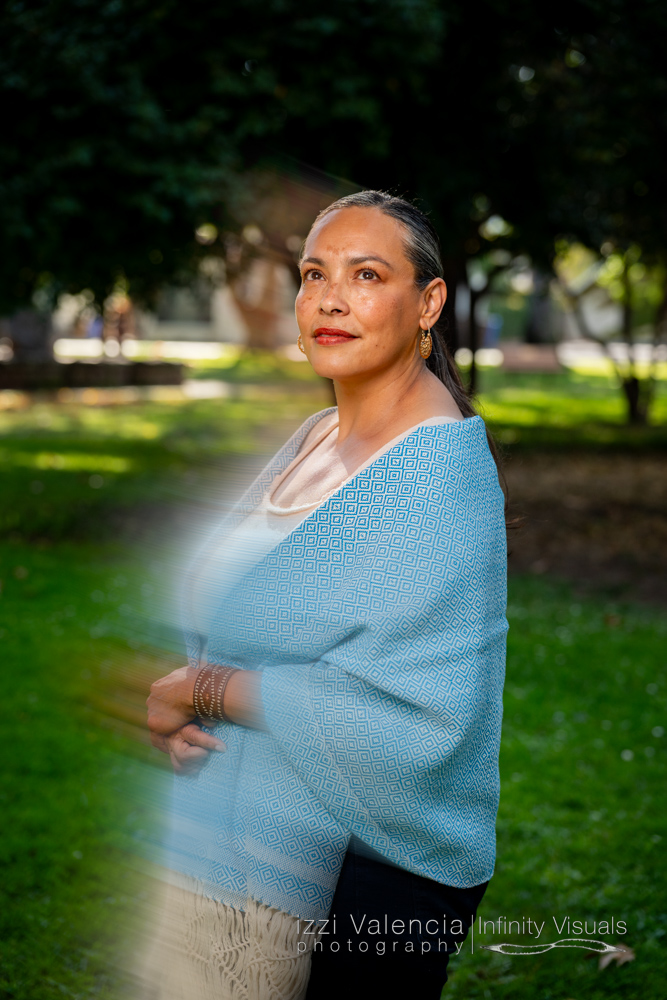
What is your name and how did your family makes it’s way to Napa?
Gloria Castanon de Aro. My maternal grandfather was born in Arizona because his father was fighting in the Mexican revolution. When things got pretty bad, he and his pregnant wife got on top of a freight train, and they came to Arizona where he worked in the mines. My grandfather was born there. They returned to Mexico when my grandfather was still very young. He didn’t know he was born in the US until he became a Bracero. He came back to the US as a bracero and his mother finally told him that he’s a citizen. She decided not to tell him until later so he wouldn’t be drafted in the war. Once she told him, she gave him his certificate and everything. He, his brother, and a couple other men from Los Aros, Zacatecas, were braceros. After the program was done, they were working on the railroads. Afterwards, they had a call from somewhere, whoever was directing the Braceros at the time, they were calling for 4 men to come up to Napa Valley 1952 to work in the vineyards for Robert and Peter Mondavi’s parents. They worked for them at Charles Krug for years. It’s funny because my grandpa used to get extra work because the mother of Peter and Robert, they called her “the grandma”, she would say “Pascuali, you have a lot of bambinos!” so she would call him to work at their house and garden. That is how my family settled in Napa. Then that’s how most immigrants story goes, bit by bit, more people started to come, a cousin, a nephew.
In 1960, my mother came against the will of her mother. There was a saying at the time that said, “a single woman, who would go to the north would go down a bad path or live a frowned upon lifestyle”. My grandfather’s side of the family was quite liberal. Like his, my grandpa’s father fought in the revolution. He also fought for the separation of church and state. They came from a more open-minded family. My great-grandfather, my grandpa’s father, took my mother to Juarez, and then my dad met her here. In two years, my mother saved up money and bought a house in Jerez, just in case life up north didn’t work out, but she never actually went back to live there. She met my dad in 1969 in the fairs of Jerez. They got married in 1971. They got married in Mexico then came to the US in 1976. When I was two, they bought their house here in Napa and my mom lived there for 50 years until she passed away in April 2026. My mom, when she was a teenager and in her 20s, she worked picking walnuts, plants, grapes, also in the chicken and eggs farms, it was very rural. In fact, back in the days, Ana’s Cantina in Saint Helena, it’s still there; the Mexicans would get their groceries from there because there weren’t any little Mexican grocery stores yet. The owners of Ana’s Cantina would once in a while go to stores in San Jose or Oakland to buy some basics such as beans, rice, tortillas, masa, dried chiles. It was an improv Mexican grocery store within the cantina.
My mom’s side of the family comes from Los Arro in Zacatecas, which is actually founded in the 1600s. My mom’s family has been there since, and the last name is from Los Arro. It’s a really strong root in Zacatecas. My dad’s side of the family is from Zacatecas as well. They came later in the 70s. He has two brothers and his mom, who’s 101 years old, who live here in Napa too. Both sides of my family live in Napa Valley, which is pretty awesome. We all been here many, many years, since 1952, making it 74 years in the valley. The older people, like my dad and my mom, didn’t have a lot of formal education. My mom only had a third grade education, and her older siblings, like her also didn’t get a higher education because the local school didn’t have any more grades, there was no more. Then the younger ones, who my mom’s 25 years older than her youngest siblings, got to go to Jerez in Mexico and attend a middle school. My dad had no schooling at all. When he came, he started working at the tannery here on Coombs Street, and my mom worked there too. That’s how they were able to save up money to buy their little house and stuff in 1976. Then later around 1988 or so, they bought a duplex here, off of Old Sonoma Road. They were very wise with their money. They were really careful, they never had a brand new car or fancy purses or nothing. They would treat themselves sometimes, but it wasn’t extravagant. They were good investors. Because of that generational wealth, they were so generous to give my brother and I those duplexes in 2005, before they died. That allowed us to have a place to live very cheaply. Then when we had a chance, we bought our own homes. It really made my life a lot easier having that property, and then having a cheap mortgage, and then being able to rent it out. Then when my dad passed away, he left us some money, which allowed me to have a down payment for my home. My plan is to leave it to my kids too. They did a lot of really good things for the limited amount of education and opportunities they had. They learned how to take advantage of those opportunities.
Did they ever talk about how it was coming to Napa and finding community?
The good part was that there was already a little group of Mexicans, not that many. My mom and my dad were a part of the “committee”, which founded Clinic Ole, for example. They funded a lot of things to help the Latino community. My mom, for example, would go to the dances with her uncles and cousins where they would sell tacos, to fundraise for projects. One of them, which no longer exists, but it used to, is they had a fund for funerals. Each person would give like $5 or a varying amount. When someone would die, they would cover the funeral costs. Whether they wanted to be buried here or if they wanted to return to Mexico, but it was crowdfunding. Then also with Clinic Ole, it started behind La Luna Market in a little trailer. It was only 2 days a week and they had volunteer doctors. Now, if you see it, it’s huge but it started as very grassroots.
Did your mom ever talk about how they started that, or how she got involved in it?
I think it had a lot to do with her paternal side of her family. They were very liberal. They were very much activists. My great grandpa, like I said, fought in two wars for the people’s liberation. So she just had that in her. And her whole family did too.
What was one of the biggest challenges that they probably faced?
My mom was always a very positive person. She, like myself, saw things through rose colored glasses, but the truth is that there was a lot of discrimination. She recalls, for example, not being able to go into a movie theater because she was Mexican. She’s someone that was just super friendly and bubbly regardless of how people treated her. Language barrier for sure. Although she ended up going to Napa Valley College and taking ESL classes and some early childhood development classes. So she was really proactive in her parenting too, gentle parenting before it was a thing. She took parenting and child development classes and she really implemented it. My dad was a kind person. I feel like I won the lottery with my parents. I had fantastic parents. I think it’s actually quite phenomenal because he himself, his father, died when he was four. So his mom became a widow with three little boys at 25. Back then there weren’t a lot of options. But she did what she could to make sure her kids succeeded. She is still alive. She’s almost 102 in January 2027. It’s quite remarkable that given his hardships, I mean, no schooling at all. At five years old, literally, they would send him to the hills to tend to the cows. He said he would eat field mice, which sounds extraordinarily, but that’s how it had to be. He came undocumented when he was younger. I think he came 1st when he was 16. He came to Modesto, he was with an uncle. Then they went to Chicago. He was deported like 2 or 3 times. Then he met my mom, who didn’t know she had documents. It’s funny because he had a plan to come through Tijuana and how to get over. But my mom’s like, “well, I’ll just use my MICA”, and my dad was surprised.
I mean, there are definitely a lot of barriers. Even myself, growing up, sometimes if we’d go to the Montgomery Wards or the stores that were there, just the looks we would get, not the most welcoming. There were obviously always people that were really nice, but others that weren’t. In fact, our neighbors told us later on when we moved to the Westwood area, which is where their house was. Before it was a working class white community. The neighbors got together and were trying to talk about how they could kick us out. It was a big scandal because it was like mostly white people, now it’s mostly Mexicans. They told us later once they got to know us, how nice we were, that we’re actually really great people and we still have a great relationship with them to this day. I didn’t know that at the time because I was little. My parents raised 2 college educated kids, and I now have a master’s degree, a licensed clinical social worker. I work for Napa County in Mental Health. I’m a counselor with older adults. That’s another thing. My mom was an in-home support services worker. She taught us to have a really good connection and respect our elders. So much so that, I think we took family pictures like twice in our entire lives. And one of them, Miss Peggy’s in them. She was one of her IHSS clients.
What is a stereotype that you’ve heard about immigrants, that you would like to correct?
That immigrants are moochers. That we take up services and just come here for freebies. When it’s very well documented that that’s not the case, we contribute more than we take. Just like anyone, we’re here to make it a better life for our families. We forget who this land belonged to. It’s something to remember, as well. That at least Mexicanos were native. Not 100%, but we are native to this land. I think sometimes we forget that the boundaries were formed by other people. This is our land, too. I found out through my DNA that I’m Pueblo Nation, which starts, I think, in Arizona, New Mexico, and ends in the south of Zacatecas, which is where my parents are from. I’m like, wow, back then there weren’t borders, like Pueblo Nation was that big. It was all one area, one people.
Is there anything you’d like to share as words of advice or encouragement or comfort to other immigrants who are still or just immigrated or about to immigrate?
I recognize that things are tough, especially for the people that come first, like my parents did. There’s so many barriers: language, money, stereotypes, discrimination. But there are a lot of opportunities as well. Most especially for themselves, if they apply themselves to learn English or learn a special skill, it’s absolutely possible. Most especially for their children, to get involved in their kids’ education. I think that is why most immigrant families come, is to provide a better future for themselves, but also their children. There’s a lot of great professionals out there that are really there to help them in schools, with mental health, in nonprofits. Take advantage of those resources. It’s not bad to be taking, sometimes there can be shame around that. But ultimately, that’s how we progress. Taking those opportunities and really utilizing them in our favor to grow and succeed. I absolutely believe that I see that in so many people, including myself. Coming from humble beginnings with my parents of no and or very little formal education, but having taught us since we were young, ever since I can remember, it was like, we’d get birthday money, and half of it was put in our college savings. If you think about it, my parents had never even stepped foot into a college. But they knew they wanted that for their kids. I never had a doubt. I was like, of course I’m going to college because my parents always told us we would. Even though they really had no clue what it meant. They did have that notion for us. I’ve always felt their support and that they were proud of me. Really bringing up your kids and lifting them up, not talking down to them. Really instilling in them a bright future, just to look for that. Oftentimes when parents are stressed out or feel hopeless, even if they don’t want to, they can kind of put their kids down with that too. But really lift them up with their words, it doesn’t have to be big. Like I said, my parents opened a bank account for us for school. And by the time I went to school, it was surely not enough, but it was still the concept, that’s what it was for. They supported, encouraged, cheered on, and loved us. My parents raised my brother and I very evenly, no gendered roles, very progressive.
 English English
 Español de México
 Tagalog
 English
 Spanish
 Tagalog